
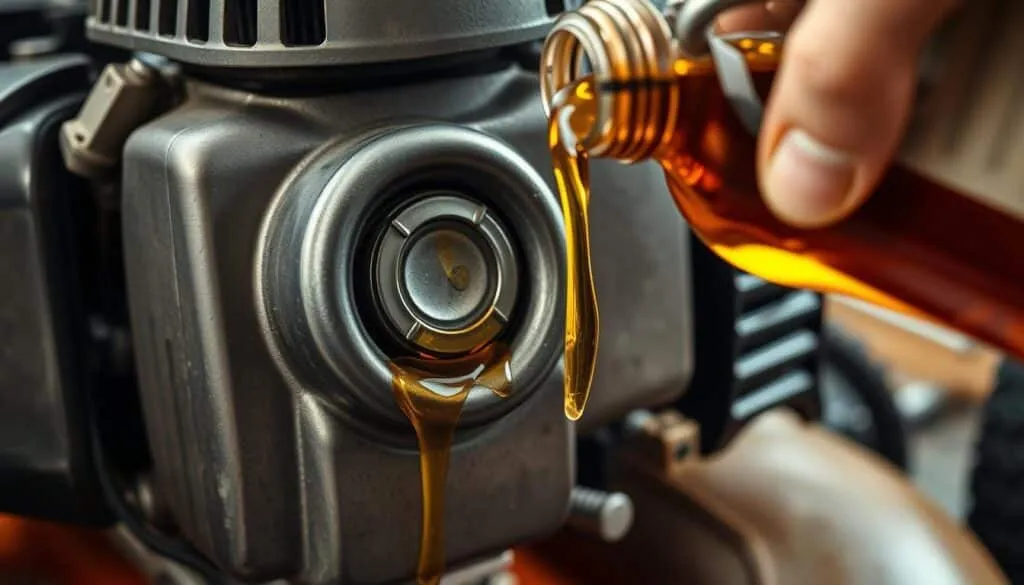
Have you ever considered that the secret to a pristine lawn might be hiding inside your mower’s engine?
Choosing the correct lubricant is not just a minor detail. It is the lifeblood of your lawn mower. The right selection ensures your equipment runs smoothly and powerfully all season long.
Using the proper oil prevents excessive wear on engine parts. It also reduces the risk of overheating. This leads to consistent power for a cleaner cut and a healthier lawn. You will also spend less time on frustrating repairs.
Your specific mower model, local climate, and how you use your equipment all matter. Understanding these factors is essential before you make a purchase or perform a change.
Proper maintenance with the right lubricant extends your machine’s life. It also improves fuel efficiency and lowers emissions. This guide will walk you through oil viscosity, temperature effects, and simple changing steps.
We provide clear, actionable advice based on manufacturer guidelines. This helps you make smart decisions for your mower’s needs and your lawn’s beauty.
Key Takeaways
- The correct oil is critical for your mower’s engine performance and longevity.
- Proper lubrication prevents overheating and reduces wear on engine components.
- Your local climate and mower usage patterns influence the best oil choice.
- Regular oil maintenance improves fuel efficiency and reduces harmful emissions.
- Following a consistent maintenance routine saves time and money on repairs.
- Understanding oil basics is fundamental to effective lawn care equipment ownership.
Understanding the Importance of Using the Right Oil for Your Mower
Think of your mower’s engine oil as its circulatory system, essential for healthy operation. This vital fluid creates a protective barrier between moving metal parts. It reduces friction, prevents excessive wear, and dissipates heat generated during use.
Your lubricant also acts as a cleaning agent. It carries away dirt, debris, and combustion byproducts from critical components. These contaminants remain suspended until you perform your next change.
How Oil Impacts Engine Performance and Lifespan
Using the correct viscosity ensures proper lubrication at startup and during operation. Thicker oils provide better protection in high heat. Thinner varieties flow more easily in cold conditions.
Look for service classifications like SF, SG, SH, SJ or higher. These indicate high-quality detergent oils with additives that clean components and prevent sludge. Proper selection can extend your machine’s lifespan by years.
Comparative Overview of Oil Viscosity and Temperature Effects
Temperature dramatically affects lubricant performance. SAE 30 works best above 40°F but becomes too thick in colder weather, causing hard starting. Multi-grade options like 10W-30 function across varying ranges.
However, 10W-30 may thin out above 80°F, leading to increased oil consumption. Choosing the wrong viscosity for your climate risks inadequate lubrication and accelerated engine wear. Regular changes remain essential as additives deplete over time.
Determining What Type of Oil for a Push Mower You Need
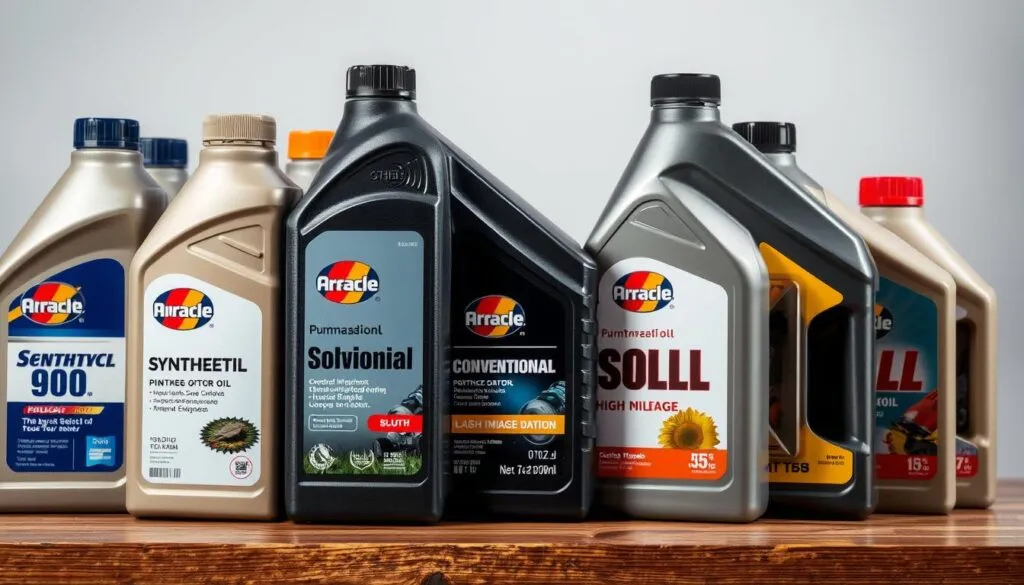
Choosing between different lubricant options can significantly impact your equipment’s reliability and longevity. Your selection depends on local weather patterns and how frequently you use your machine.
Comparing SAE 30, 10W-30, and Synthetic Options
Different lubricant formulations serve distinct purposes. SAE 30 works well in warm conditions above 40°F. It provides reliable performance during summer months.
10W-30 offers versatility across changing weather conditions. This multi-grade option flows better in cooler temperatures. However, it may thin out during extreme heat.
| Lubricant Type | Temperature Range | Best For | Considerations |
|---|---|---|---|
| SAE 30 | 40°F and above | Warm climates | Economical summer choice |
| 10W-30 | 0°F to 100°F | Seasonal changes | Check levels frequently in heat |
| Synthetic 5W-30 | -20°F to 120°F | Extreme conditions | Superior engine protection |
| Vanguard 15W-50 | 20°F to 130°F | Commercial use | Heavy-duty applications |
Synthetic options like 5W-30 deliver best protection across wide temperature ranges. They maintain consistency in both cold and hot conditions. These premium lubricants reduce wear on engine components.
Selecting the Suitable Viscosity for Your Climate
Your local weather determines the ideal viscosity choice. Consistently warm regions benefit from SAE 30. Areas with seasonal changes need 10W-30.
Cold climates require synthetic 5W-30 for reliable starting. The “W” in grade designations indicates winter performance. Higher numbers represent thickness at operating temperatures.
Always consult your owner’s manual for brand-specific recommendations. Briggs & Stratton and John Deere have different preferences. Use high-quality detergent oils without special additives.
Step-by-Step Guide to Changing Your Push Mower Oil
The simple process of replacing old engine oil can dramatically extend your equipment’s lifespan. Regular maintenance ensures optimal performance and prevents costly repairs.
Follow these clear instructions to complete this essential task safely and effectively. Proper preparation makes the entire procedure straightforward.
Essential Tools and Supplies for the Job
Gather these items before starting your oil change. Having everything ready saves time and prevents interruptions.
You will need the correct amount of fresh lubricant based on your machine’s specifications. Walk-behind models typically require 15-18 ounces, while riding mowers need 48-64 ounces.
| Equipment Type | Oil Capacity | Change Interval |
|---|---|---|
| Walk-Behind Mower | 15-18 oz | Every 50 hours or annually |
| Riding Mower | 48-64 oz | Every 100 hours or annually |
| John Deere Models | Approx. 2 quarts | Follow manufacturer guidelines |
Detailed Instructions for an Effective Oil Change
Begin by running your engine for a few minutes to warm the oil. This helps it drain more completely. Always disconnect the spark plug wire for safety.
Position your equipment on level ground with easy access to the drain plug. Place your drain pan beneath the plug and remove it carefully.
Allow all old engine oil to drain completely. This may take several minutes. Wipe any spills from the mower deck using rags.
Refill using a funnel to avoid spills. Add small amounts at a time, checking the level frequently. The dipstick should show oil between the full and add marks.
Never overfill your engine, as this can cause serious damage. Always dispose of used oil responsibly at recycling centers.
Reconnect the spark plug wire when finished. Run the engine briefly to circulate new lubricant throughout the system. Check the level one final time to ensure proper oil capacity.
Maintenance Tips and Best Practices for Your Mower

Proper care protocols extend the working life of your mower while maintaining cutting quality. Consistent attention to lubrication needs prevents unexpected breakdowns during peak mowing season.
Regular Oil Checks and Interval Recommendations
Make checking your lubricant level a habit before each mowing session. Inspect the dipstick every time you prepare to cut your lawn. Running with insufficient fluid causes severe engine damage.
During hot temperatures above 80°F, check levels more frequently. Higher heat increases consumption and stresses your mower engine. Track your usage hours with a simple log or hour meter.
Establish clear maintenance intervals based on both time and usage. Most equipment needs fresh lubricant every 50 hours or annually. Following these recommendations ensures optimal performance.
Following Manufacturer and Engine Manual Guidelines
Always consult your specific engine operator’s manual first. This document provides tailored maintenance recommendations for your exact model. The service sticker under the hood offers additional guidance.
Use manufacturer-approved products like Briggs & Stratton or John Deere lubricants. These are formulated specifically for small engines. New equipment typically requires you to add fluid before first use.
Online tools help determine the best lubricant for your engine model and local temperatures. Proper care extends equipment lifespan significantly. Address small issues immediately to prevent major repairs.
Conclusion
The investment you make in proper lubrication today determines your equipment’s performance tomorrow. Selecting the correct lubricant for your lawn mower engine is fundamental to maintaining optimal operation and extending equipment lifespan.
Remember the main lubricant types: SAE 30 for warm climates, 10W-30 for varying temperatures, and synthetic 5W-30 for superior protection across all conditions. Consider your local climate and usage patterns when choosing.
While different lubricant brands vary in cost, investing in high-quality engine oil pays dividends through better performance and reduced wear. Regular changes at recommended intervals form the foundation of proper maintenance.
Always consult your owner’s manual for specific engine recommendations. The small time investment required for regular checks prevents costly repairs and premature replacement.
Armed with this knowledge about lubricant types and maintenance procedures, you can keep your mower running smoothly for years. Your beautiful lawn deserves reliable equipment care.
FAQ
How often should I change the oil in my lawn mower engine?
You should typically change your engine oil every 25 to 50 hours of operation. For most homeowners, this means an annual oil change before the mowing season starts. Always check your specific engine model’s manual for the manufacturer’s precise recommendations.
Can I use car engine oil in my push mower?
It is not recommended. Many automotive oils contain additives that can harm small engines. You should use oil specifically designed for lawn equipment, like Briggs & Stratton or Honda mower oil, to ensure the best protection and performance.
What is the difference between SAE 30 and 10W-30 oil?
SAE 30 is a single-grade oil best for consistent, warmer temperatures. 10W-30 is a multi-viscosity oil that performs well in a varying temperature range, offering easier starts in cold weather while protecting your engine when it’s hot.
Is synthetic oil better for my lawn mower?
Synthetic oil generally provides superior protection, reduces engine wear, and performs better in extreme temperatures. While it has a higher upfront cost, it can extend your engine’s lifespan, making it a great choice for demanding conditions.
How do I check the oil level in my mower?
Ensure the engine is on a level surface and cool. Unscrew the dipstick, wipe it clean, reinsert it fully, and then remove it again to check the level. The oil should be between the “Full” and “Add” marks on the dipstick.
What happens if I use the wrong oil type?
Using the incorrect viscosity or grade can lead to poor lubrication, increased engine wear, overheating, and difficulty starting. This can cause permanent damage to your mower’s engine and lead to costly repairs.