
Have you ever wondered if the lubricant you’re using could be silently harming your machine’s engine? Choosing the correct fluid for your equipment is not just a suggestion—it’s a critical decision that impacts performance and longevity.
Your specific machine model, its engine design, and even your local weather patterns determine the ideal lubricant. Using the wrong product can lead to difficult starts on chilly mornings, excessive consumption during summer heat, or accelerated wear that shortens your equipment’s life.
This guide will help you understand your equipment’s unique needs. We’ll compare different lubricant grades and establish simple maintenance routines. Whether you have a small residential cutter or a large riding machine, knowing these specifications is essential for smooth operation.
Modern small engines have precise requirements that differ from car engines. Following manufacturer guidelines, like those from Briggs & Stratton, ensures optimal function and protects your warranty. By the end, you’ll feel confident selecting the perfect lubricant for your climate and machine.
Key Takeaways
- Using the correct lubricant is essential for engine performance and preventing damage.
- The right choice depends on your specific machine model, engine, and local climate.
- Incorrect lubricant can cause hard starting, increased consumption, and premature wear.
- Manufacturer recommendations, like those from Briggs & Stratton, are crucial to follow.
- Proper lubricant selection and maintenance keep your equipment running smoothly for years.
Understanding Your Mower’s Requirements
Before selecting any lubricant, you must first identify your machine’s unique requirements. Your equipment’s design and operating conditions dictate the ideal fluid specifications.
Engine Types and Capacities
Most modern cutting equipment features four-stroke engines. These systems keep gasoline and lubricant separate. Some older models may have two-stroke designs that mix fuel and oil together.
Capacity varies significantly between equipment types. Walk-behind units typically hold 15-18 ounces. Riding machines require 48-64 ounces depending on engine size.
| Equipment Type | Engine Design | Typical Capacity | Cylinder Configuration |
|---|---|---|---|
| Walk-behind Mower | Four-stroke | 15-18 ounces | Single cylinder |
| Riding Mower | Four-stroke | 48-64 ounces | V-Twin or single |
| Commercial Equipment | Four-stroke | 64+ ounces | Multiple cylinders |
Never overfill your engine. Excess fluid causes smoking and performance issues. It can lead to serious damage over time.
Outdoor Temperature Considerations
Ambient temperatures dramatically affect lubricant performance. Cold weather thickens the fluid, while heat makes it thinner. This viscosity change impacts how well it protects engine components.
Different regions require specific fluid grades based on seasonal variations. You may need to switch products if you experience extreme temperature swings throughout the year.
Always consult your owner’s manual for exact specifications. Using incorrect capacity or grade can void your warranty. New equipment typically comes without fluid, so add the proper amount before first use.
Choosing What Type of Lawn Mower Oil for Your Mower
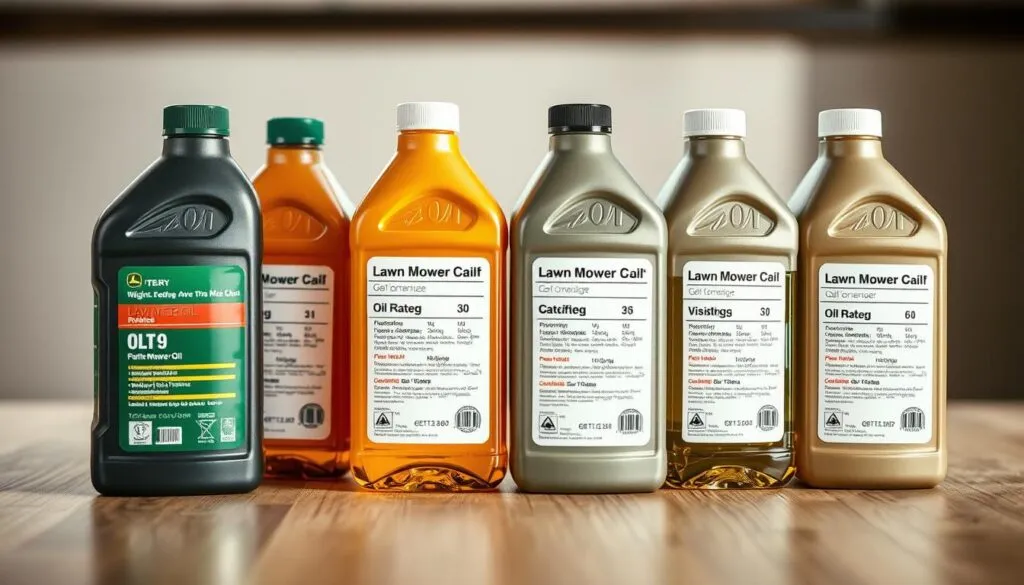
The numbers on a bottle of motor lubricant tell a critical story about its performance. This system, created by the Society of Automotive Engineers (SAE), categorizes products based on viscosity.
Viscosity measures how thick or thin a fluid is. It is vital for engine protection. If the lubricant is too thick during a cold start, it won’t flow properly. If it’s too thin on a hot day, it fails to protect vital parts.
Comparing SAE Grades and Viscosities
You will encounter four main categories of engine lubricants. Each offers different levels of protection for your machine.
| Lubricant Category | Composition | Best Use Case |
|---|---|---|
| Single Grade | Basic formula, no additives | Stable, warm climates |
| Multi-Grade | Contains viscosity additives | Areas with seasonal temperature changes |
| Synthetic Blend | Mix of conventional and synthetic | Improved cold-weather starting |
| Full Synthetic | Artificially engineered | High-performance and commercial engines |
Synthetic Versus Conventional Oil
Conventional lubricants are refined from crude oil. Synthetic formulas are chemically engineered for superior performance. They offer better flow in cold weather and resist breaking down under extreme heat.
Using a synthetic product provides significant advantages. You get easier cold-weather starting and more consistent protection. It also reduces consumption and extends engine life.
A common myth is that synthetic lubricants need special procedures. You can switch at any time without altering your change intervals. Brands like Briggs & Stratton approve synthetics like 5W-30 for all temperatures.
Step-by-Step Guide to Oil Change and Maintenance
Proper fluid replacement is essential for protecting your engine’s internal components. Following a systematic approach ensures your equipment receives the care it needs. This prevents premature wear and maintains peak performance.
Preparing for an Oil Change
Gather all necessary supplies before starting your maintenance task. You’ll need a drain pan, funnel, clean rags, and fresh lubricant. If your equipment has a filter, purchase a replacement.
Run your machine for a few minutes to warm the fluid. Warm lubricant flows more easily and carries away contaminants. This simple step improves drainage effectiveness.
New equipment requires special attention. Change the fluid after the first three to five hours of use. This removes metal filings from the break-in period.
| Equipment Type | Change Interval (Hours) | Annual Requirement |
|---|---|---|
| Walk-behind Equipment | Every 50 hours | Yes, whichever comes first |
| Riding Equipment | Every 100 hours | Yes, whichever comes first |
| All New Equipment | After 3-5 hours | Critical first change |
Checking and Monitoring Oil Levels
Regular monitoring prevents engine damage from insufficient lubrication. Check your fluid level before each use. This five-minute inspection can save you from costly repairs.
Park your equipment on level ground for accurate readings. Remove the dipstick and wipe it clean with a rag. Reinsert it fully without screwing, then remove to check the level.
Add fluid gradually if the level is low. Pour a few ounces at a time, allowing it to settle. Recheck the level between additions to avoid overfilling.
Consistent maintenance is your engine’s best protection. Fresh lubricant removes contaminants and ensures proper viscosity. Following these steps extends your equipment’s lifespan significantly.
Maintaining Engine Performance and Longevity

The difference between a short-lived machine and decades of service lies in diligent maintenance practices. Consistent care ensures your equipment operates at peak efficiency while preventing costly repairs.
Proper lubrication serves dual critical functions. It reduces friction between moving parts while carrying heat away from high-temperature areas. This cooling action prevents overheating and component damage.
Regular Maintenance and Inspection Tips
Before each use, perform a quick visual inspection. Check the fluid level using the dipstick and look for any leaks around seals. Discolored lubricant may indicate contamination requiring attention.
Watch for performance indicators that signal potential issues. Excessive exhaust smoke, unusual engine noises, or difficulty starting often point to lubrication problems. Reduced power output suggests internal wear.
| Maintenance Indicator | Potential Issue | Recommended Action |
|---|---|---|
| Dark, dirty lubricant | Contamination buildup | Immediate fluid change |
| Low fluid level | Consumption or leaks | Top up and inspect seals |
| Milky appearance | Coolant contamination | Professional inspection needed |
| Metallic particles | Internal component wear | Engine evaluation required |
Keep a maintenance log to track service intervals and observations. This helps identify patterns and catch problems early. High-quality detergent formulas provide superior protection by suspending contaminants until removal.
Synthetic products offer enhanced performance but don’t eliminate regular change intervals. Follow manufacturer schedules regardless of your lubricant choice. Consistent maintenance protects your warranty and extends equipment life significantly.
Selecting the Right Oil Viscosity and Grade
Understanding the relationship between temperature ranges and lubricant performance is essential for optimal engine protection. The numbers on your bottle indicate how the fluid flows in different conditions.
SAE 30 works well in warm climates above 40°F but causes hard starting in colder weather. SAE 10W-30 offers versatility across moderate seasonal changes from 0 to 100°F.
Understanding Manufacturer Recommendations
Your equipment’s manual provides specific guidance that overrides general advice. Different engine designs have unique requirements for optimal performance.
Synthetic SAE 5W-30 delivers superior protection across extreme temperatures from -20°F to 120°F. It reduces consumption while improving cold-weather starting. Vanguard 15W-50 suits commercial applications with continuous operation.
Service ratings like SF, SG, SH indicate formulation quality. Higher letters mean better detergent properties and oxidation resistance. Always verify automotive lubricant compatibility before use.
Check your owner manual for the perfect match between your climate, usage frequency, and engine specifications. This ensures you select the ideal viscosity for your equipment’s needs.
Conclusion
Protecting your investment in outdoor power equipment comes down to consistent, informed maintenance decisions. The right lubricant choice depends on your specific engine design, local climate, and usage patterns.
Following your manufacturer’s guidelines provides a reliable foundation for selection. Quality fluid is a minimal expense compared to major engine repairs. This simple investment pays dividends in long-term performance.
Establish a regular maintenance routine with pre-use checks and scheduled changes. Consider synthetic options for superior protection across temperature extremes. These products offer better performance in demanding conditions.
Your equipment’s reliability, fuel efficiency, and longevity directly reflect your lubrication choices. You now have the knowledge to make confident decisions that will keep your mower running smoothly for seasons to come.
FAQ
How often should I change the oil in my mower?
You should replace the engine oil every 25 to 50 hours of operation or at least once per mowing season. For engines that see heavy use, changing it more frequently, like every 25 hours, provides superior protection. Always consult your owner manual for the manufacturer’s specific service interval.
Can I use synthetic oil in my lawn mower engine?
A>Yes, you can use synthetic oil in most modern mowers. Synthetic oils offer better performance in extreme temperatures, improved lubrication, and reduced oil consumption. They are an excellent choice for extending engine life, especially if you operate your equipment in very hot or cold conditions.
What happens if I use the wrong oil viscosity?
Using an incorrect viscosity can harm your engine. Oil that is too thick won’t circulate properly in cold temperatures, causing startup difficulties and wear. Oil that is too thin may not provide a strong enough lubricating film at high temperatures, leading to increased friction and potential engine damage.
Where can I find the correct oil grade for my specific model?
The best source for this information is your owner’s manual. It will list the recommended SAE grade (like 10W-30) and oil type. You can also often find a sticker on the engine itself or check the manufacturer’s website using your model number.
Is it necessary to check the oil level before each use?
It is a highly recommended maintenance habit. Checking the oil level before you start mowing ensures the engine has adequate lubrication. Running the motor with low oil is a primary cause of premature engine failure. Simply locate the dipstick, wipe it clean, reinsert it, and check that the level is within the marked range.
What is the difference between conventional and synthetic mower oil?
Conventional oil is refined from crude oil. Synthetic oil is chemically engineered to have a more consistent molecular structure, providing better protection against heat, cold, and sludge buildup. While synthetic generally offers enhanced performance, a high-quality conventional oil is still suitable if it meets your engine’s specifications.