
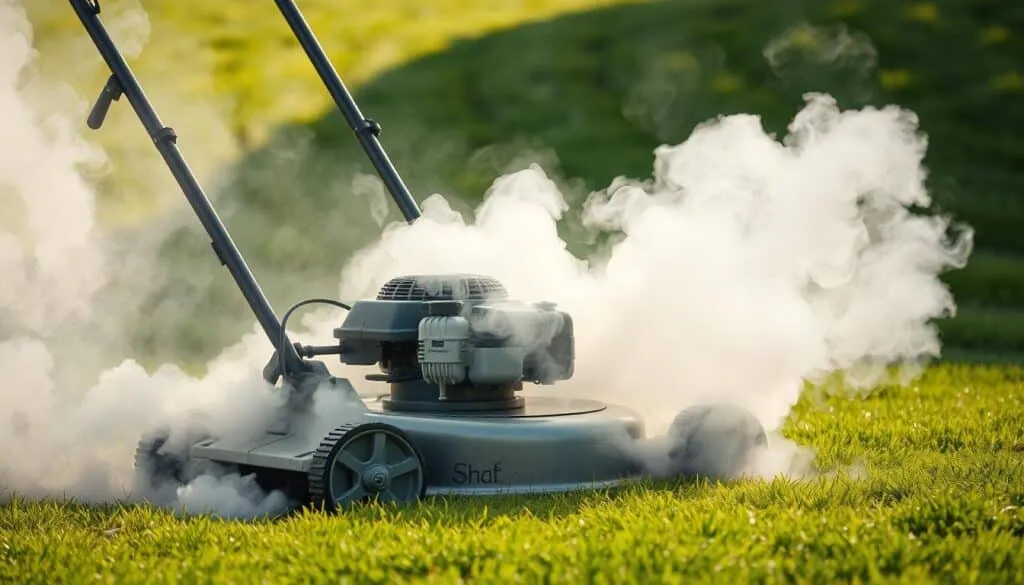
That sudden puff of white smoke from your equipment can be startling. You might wonder if a major repair is needed or if it’s safe to continue your yard work.
Rest assured, this situation is usually not a sign of danger. In most cases, the visible exhaust has simple, manageable origins.
The culprit is often related to the lubricant in the machine. Excess oil finding its way onto hot engine parts is a frequent cause. This can happen from overfilling the reservoir or tipping the machine at a steep angle.
Understanding the root of the problem empowers you to take the right steps. This guide will walk you through identifying the reasons and applying effective solutions yourself.
Key Takeaways
- White or blue exhaust is typically not dangerous and often has straightforward fixes.
- The most common cause is oil burning on the engine, usually from an overfill or spill.
- Mowing on steep slopes or tipping the machine can lead to this issue.
- Simple adjustments can often resolve the problem without professional help.
- This article provides both quick solutions and deeper repair techniques for persistent cases.
Understanding the Issue: why is my lawn mower blowing white smoke
A smoking engine demands quick action and proper identification. The color of the exhaust provides crucial clues about what’s happening inside your machine.
Identifying White Smoke and Its Implications
White or blue smoke coming from the engine typically means oil is burning. This occurs when lubricant reaches hot combustion areas.
Several reasons can cause this problem. Overfilling the crankcase is common. Using the wrong oil grade or operating on steep slopes above 15 degrees can also lead to smoke coming from the unit.
More serious mechanical issues might be present. Look for signs like poor acceleration or backfiring. These symptoms could indicate worn cylinder rings or a faulty crankcase breather.
Safety Measures When Your Mower Starts Smoking
Your first response must be safety. Immediately shut off the engine when you see any smoke. This prevents potential fire hazards and stops further damage.
For electric models, disconnect the spark plug wire. This extra step eliminates ignition sources completely. Always let the equipment cool down before you inspect it.
Understanding these initial steps helps you assess the situation calmly. Proper identification guides your next moves, whether it’s a simple fix or a sign you need professional help.
Common Causes and Quick Fixes
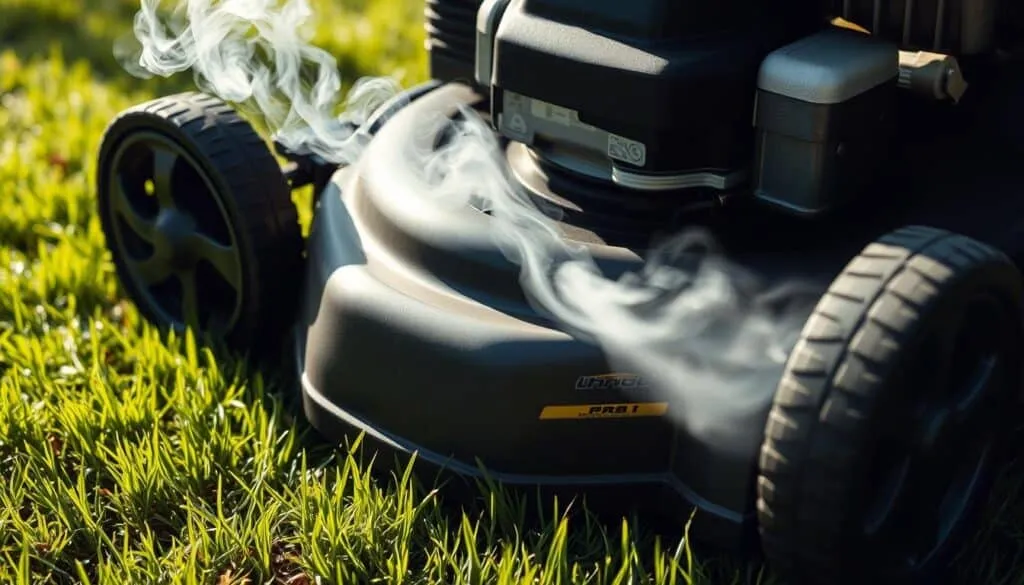
Spotting that plume of exhaust from your equipment can be alarming. Fortunately, the most frequent reasons are simple to diagnose and often easy to correct yourself.
Understanding these common causes empowers you to take swift, effective action.
Excess Oil and Spillage Concerns
Too much oil in the reservoir is a leading culprit. Overfilling forces lubricant onto hot surfaces inside the engine, where it burns.
Spillage is another key issue. This happens when you operate on steep slopes or tip the machine sideways. Oil can escape the crankcase and reach parts where it shouldn’t be.
Always check the oil level correctly. Wipe the dipstick clean, reinsert it fully, then pull it out to get a true reading. The fluid should be between the marked lines.
Air Filter, Spark Plug, and Carburetor Issues
A dirty or clogged air filter restricts airflow. This disruption can affect the fuel mixture, leading to performance issues and visible exhaust.
For safety, always disconnect the spark plug wire on electric models before any inspection. A problematic spark plug can contribute to incomplete combustion.
If the air filter is severely blocked, it might create a too-rich fuel mixture. This situation could point to a need for carburetor adjustment to restore the proper air-fuel balance.
Quick Steps to Shut Off and Restart Your Engine
Your first move is always to shut off the engine immediately. Allow the unit to cool down completely before you touch anything.
After addressing the potential cause—like cleaning the air filter or draining excess oil—restart the equipment. Let it run for 5 to 10 minutes.
This burn-off period allows any residual oil in the combustion chamber to clear. If the exhaust clears up, you’ve likely solved the problem.
In-Depth Repair Techniques and Preventative Maintenance
When simple fixes fail to resolve the exhaust issue, deeper mechanical problems may be at play. This section explores advanced repair methods and maintenance strategies for persistent cases.
Detailed Repair Methods for Oil Leaks and Blown Gaskets
Persistent oil leaks often indicate serious internal damage. Check the crankcase carefully for any signs of leakage around seals and gaskets.
A compromised head gasket allows lubricant to enter the combustion chamber. This creates the characteristic white blue exhaust plume. Worn piston rings or cylinder walls can produce similar symptoms.
Adjusting the Carburetor and Checking Oil Levels
Proper carburetor adjustment ensures your engine receives enough air for optimal combustion. A rich fuel mixture often contributes to performance issues.
Always verify the oil level using the dipstick method. Contaminated engine oil may feel thin or smell like gasoline. This indicates fuel has leaked into the crankcase.
Routine Maintenance to Prevent Future Issues
Regular inspection of your equipment prevents many common problems. Check the air filter frequently and replace it when dirty.
Consult your owner’s manual for specific maintenance schedules. Proper care of the combustion system and regular oil changes maintain optimal performance.
Drain contaminated oil immediately and refill to the correct level. This simple step protects internal components from damage caused by inadequate lubrication.
Conclusion
Understanding when to handle repairs yourself versus seeking expert assistance is crucial. Persistent exhaust issues or complex mechanical problems often require professional diagnosis. A qualified technician can address internal components like a faulty gasket or combustion chamber seals.
Regular maintenance prevents many common equipment problems. Frequent check-ups help you catch minor issues before they escalate. This proactive approach keeps your machine running smoothly throughout the lawn care season.
The troubleshooting knowledge you’ve gained saves time and money. You can now confidently address smoking concerns starting with simple solutions. This systematic approach prevents unnecessary repair shop visits.
Proper care extends your equipment’s lifespan and ensures reliable performance. Maintaining a smoke-free operation benefits your respiratory health and neighborhood relations. Your investment in learning these skills pays long-term dividends for your lawn maintenance routine.
FAQ
What does white smoke from a lawn mower engine typically indicate?
White smoke usually points to burning oil inside the combustion chamber. This often happens from overfilling the crankcase, a damaged head gasket, or oil leaking past worn piston rings. It’s a sign that engine oil is entering areas where it shouldn’t be.
How do I check if too much oil is causing the smoke?
First, ensure the engine is cool and on a level surface. Remove the spark plug wire for safety. Pull out the dipstick, wipe it clean, reinsert it fully, and then remove it again to check the level. If the oil is above the “Full” mark, you need to drain the excess to fix the problem.
Can a dirty air filter cause white or blue smoke?
A clogged air filter itself doesn’t directly create white or blue smoke. However, it can cause an overly rich fuel mixture, leading to incomplete combustion. This might produce black smoke. The primary causes for white smoke are typically related to engine oil issues.
What should I do immediately when I see smoke coming from my mower?
A> Shut off the engine immediately to prevent potential damage. Allow the machine to cool down completely before you attempt to inspect it. Check for visible oil leaks around the engine block and always disconnect the spark plug cable before performing any repair.
Could a faulty spark plug be the reason for the smoking?
A bad spark plug usually causes hard starting, rough idling, or poor performance, not white smoke. While it’s good to inspect and replace the plug as part of regular maintenance, the smoking issue is more likely rooted in oil-related problems like a blown head gasket.
How can I prevent my lawn mower from blowing white smoke in the future?
Consistent maintenance is key. Always check the oil level before each use, ensuring it’s not overfilled. Change the oil and air filter at intervals recommended in your owner’s manual. Annually inspect the spark plug and check for any signs of oil leaks around the gaskets.