
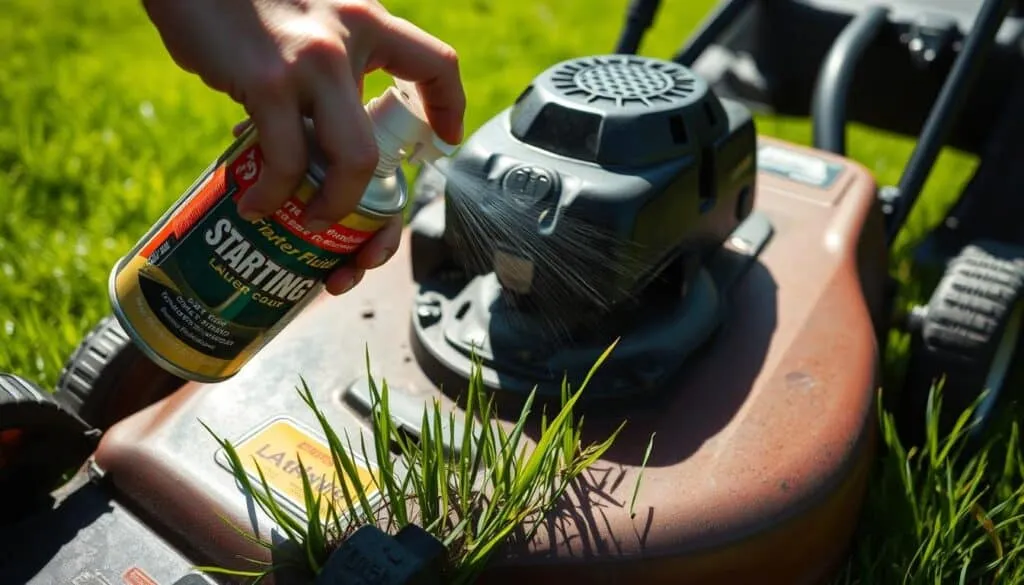
Have you ever faced the quiet disappointment of a machine that simply refuses to roar to life? You pull the cord, again and again, but the engine stays silent. It’s a common headache for many homeowners.
This guide is your direct answer. We cut through the confusion and show you the correct steps to get your equipment running. You will learn a simple, effective technique for troubleshooting stubborn starting issues.
Using a specialized aerosol can give your machine the jump-start it needs. However, applying it correctly is critical. The wrong method can lead to problems instead of solutions.
Our instructions are clear and easy to follow. You will gain the knowledge to handle this task with confidence. Save yourself time, money, and frustration by understanding your equipment better.
Key Takeaways
- Identify the precise location on your machine for safe application.
- Understand how this quick-start aid helps a reluctant engine fire up.
- Learn the fundamental safety measures to protect your equipment.
- Recognize when this solution is appropriate versus when other repairs are needed.
- Gain the confidence to perform this basic maintenance task yourself.
Understanding Starting Fluid and Its Benefits
Mastering the use of specialized engine aids can transform frustrating starting sessions into quick successes. This powerful tool provides immediate assistance when conventional methods fail.
What is Starting Fluid?
Starting fluid, commonly called ether, is a highly volatile chemical blend. It’s specifically designed to help ignite both gasoline and diesel engines.
The mixture contains compounds that evaporate rapidly and ignite easily. This creates a combustible gas that gives your equipment the energy boost needed for ignition.
You’ll typically reach for this solution when your machine is cold or hasn’t run for extended periods. It’s also useful when fuel in the carburetor has evaporated or become stale.
Importance of Using Starting Fluid Sparingly
It’s critical to note starting fluid should be your last resort after normal procedures fail. This powerful chemical is meant for emergency situations only.
Overuse can cause serious damage to engine components. Excessive application washes away vital lubrication and can harm seals.
Think of this product as a diagnostic tool. If your equipment consistently needs assistance, underlying issues likely require professional attention.
Effective Techniques: Where to Spray Starting Fluid Lawn Mower
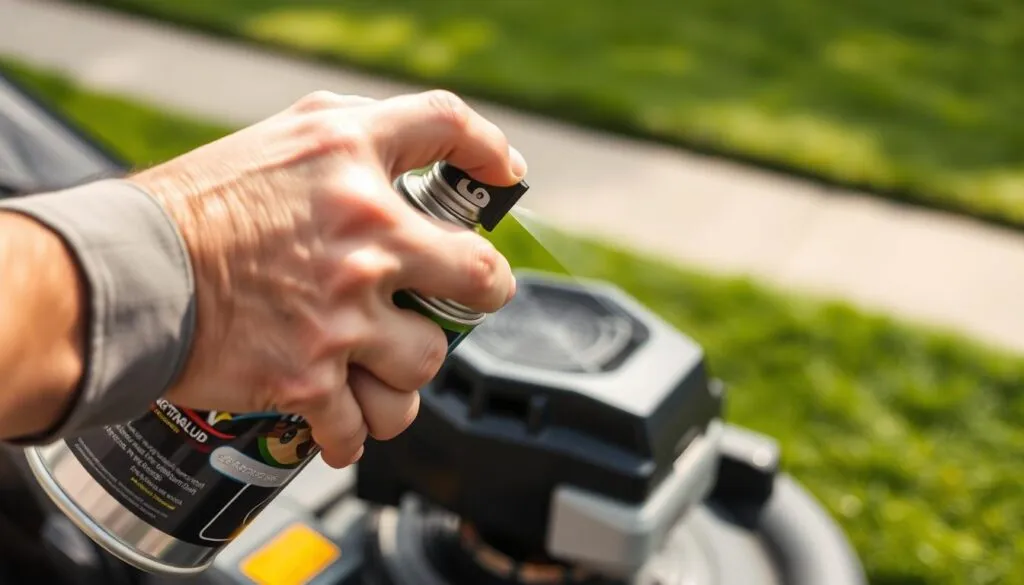
Understanding the correct entry points for engine ignition aids ensures your machinery responds immediately. Different equipment types require distinct approaches for optimal results.
The application method varies significantly between equipment categories. Each machine has specific access points that deliver the product directly to the combustion chamber.
Push Mower Application
For standard push mowers, locate the carburetor on the engine’s side near the filtration system. Remove the cover and filtration element to access the intake opening.
Apply a brief one to two-second burst into the intake port. Excessive application can cause flooding and prevent ignition. Reinstall all components before attempting to start.
Riding Mower Application
Riding equipment typically positions the carburetor under the seat or near the front. Follow the same removal process for the filtration assembly.
After successful ignition, allow the machine to operate for several minutes. This ensures the standard fuel system takes over properly.
Two-Cycle Engine Equipment
Trimmers and similar tools feature the carburetor near the fuel container. The air purification system location varies by manufacturer.
The fundamental principle remains consistent across all models. Access the intake pathway and apply the product sparingly for best results.
| Equipment Type | Carburetor Location | Application Method | Safety Considerations |
|---|---|---|---|
| Push Mower | Engine side near filter | 1-2 second burst into intake | Avoid flooding, reinstall filter |
| Riding Mower | Under seat or front area | Direct intake application | Run engine after starting |
| Two-Cycle Tools | Near fuel tank | Sparingly through cleaner port | Manufacturer variations |
Always reassemble the filtration system completely after application. Operating without proper filtration can introduce debris and cause internal damage.
If multiple attempts fail to produce ignition, this indicates deeper mechanical issues. Professional assessment becomes necessary at this point.
Tips for Safe Application and Engine Maintenance
Effective maintenance combines smart application with regular system care. Your approach determines both immediate success and long-term equipment health.
Always work in open spaces with good airflow. Keep the area clear of ignition sources. This volatile substance demands respect.
Pro Tips for Optimal Application
Hold the can several inches from the intake opening. Use brief, controlled bursts instead of continuous streams. This prevents over-saturation.
Limit attempts to two or three per session. Allow the starter and engine components to cool between tries. This prevents unnecessary strain.
How to Avoid Engine Damage and Common Pitfalls
Never substitute this aid for proper mechanical care. Consistent need signals deeper issues with fuel delivery or ignition systems.
Always reinstall the filtration assembly before operation. Running without proper protection invites debris inside. This causes premature wear.
Excessive chemical can remove vital lubrication from cylinder walls. It may damage seals and create dangerous pressure levels.
| Safety Factor | Optimal Technique | Common Mistake | Protective Measure |
|---|---|---|---|
| Ventilation | Open area operation | Enclosed space use | Check wind direction |
| Application Distance | 2-3 inches from intake | Direct contact spraying | Use short bursts |
| Attempt Frequency | 2-3 tries per session | Continuous pulling | Rest periods between attempts |
| System Reassembly | Full filter installation | Operating without cover | Double-check connections |
Fresh gasoline and clean filters reduce reliance on ignition aids. Proper adjustment keeps your equipment running smoothly. Professional help becomes necessary when problems persist.
Conclusion
Armed with this knowledge, you can confidently address those frustrating moments when your machinery refuses to start. You’ve learned the precise methods for different equipment types and the importance of proper technique.
Remember that starting fluid serves as an emergency solution, not a regular fix. Use it sparingly to avoid potential damage to your engine components. Consistent need for assistance indicates deeper issues requiring professional attention.
Combine these techniques with regular maintenance for optimal performance. Fresh fuel and clean filters reduce reliance on quick-start aids. Your equipment will reward you with reliable operation season after season.
You’re now equipped to make informed decisions about troubleshooting and when to seek expert help. This knowledge extends your equipment’s lifespan and ensures safe, efficient operation for your lawn care needs.
FAQ
Can you use starting fluid on a diesel engine?
You should generally avoid using starting fluid on modern diesel engines. Many diesel engines have glow plugs or intake air heaters, and the high compression can cause severe engine damage, known as pre-ignition or detonation. Always consult your engine’s manual first.
Is it safe to spray starter fluid directly into the carburetor?
Yes, spraying a small amount directly into the carburetor throat or air intake is the correct method. This allows the vapor to be drawn directly into the combustion chamber. Never spray it into the air filter or fuel tank, as this can be ineffective or hazardous.
What should you do if the engine starts but then dies?
If the engine starts with the fluid but won’t stay running, the issue is likely with your fuel system, not the ignition. The carburetor may be clogged, or the fuel filter could be blocked. The starting fluid provided the initial combustion, but the engine isn’t getting a steady supply of gasoline.
How many times can you attempt to start an engine with starter fluid?
A> Limit your attempts to two or three short sprays. If the motor doesn’t start after a couple of tries, continuing will only flood the engine and increase the risk of backfire or hydraulic lock. It’s a sign that you need to diagnose a deeper problem, like a faulty spark plug or no fuel delivery.
Are there alternatives to using a starting fluid like Ether?
Yes, you can use carburetor cleaner as a safer alternative in a pinch. It is less volatile but can help clean the carburetor jets as it assists with starting. For small engines, ensuring you have fresh, ethanol-free gasoline and a clean air filter is the best preventive maintenance.